
Strengthening Educators as Multipliers of Change
The Teachers’ Training Program is a core initiative of SociopreneurID designed to strengthen educators as key agents of transformation within education systems and communities. Recognizing teachers as multipliers of impact, this program focuses on building entrepreneurial mindsets, pedagogical innovation, and leadership capacity among educators.
Rather than positioning teachers solely as knowledge transmitters, the program supports educators in becoming facilitators of experiential, ethical, and impact-oriented learning.
Program Rationale
Education systems across many contexts face persistent challenges, including learning gaps, limited relevance to real-world demands, and insufficient capacity to respond to social and technological change. Teachers are often expected to address these challenges without adequate support, training, or institutional alignment.
The Teachers’ Training Program responds to this gap by equipping educators with practical frameworks, tools, and reflective practices that enable them to design learning experiences aligned with entrepreneurship education, social innovation, and sustainable development.
Program Objectives
The Teachers’ Training Program aims to:
-
#1
Strengthen educators’ competencies in entrepreneurship education -
#2
Enhance digital, financial, and innovation literacy -
#3
Support the integration of experiential and problem-based learning -
#4
Empower teachers as leaders and innovators within their institutions -
#5
Contribute to resilient, inclusive, and future-ready education ecosystems
Core Programs Under Teachers’ Training
1. Teachers’ Training Program
Overview
The Teachers’ Training Program is a structured, multi-month capacity-building initiative for educators. Pre-piloted in 2022, the program was developed through collaboration between SociopreneurID and strategic partners to address systemic gaps in teacher capacity.
Program Focus
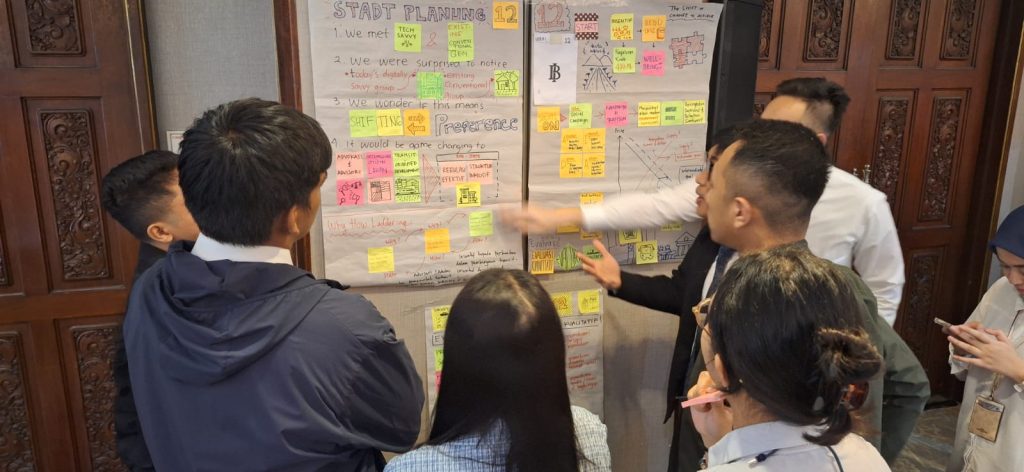
The program equips educators with competencies in entrepreneurship education, digital literacy, and financial literacy. Through experiential learning and reflective practice, teachers develop the ability to design and implement learning that prepares students with essential life skills.
Key Learning Areas
- Entrepreneurship education pedagogy
- Digital readiness and applied technology
- Financial literacy and value creation
- Ethical leadership and social responsibility
Expected Outcomes
- Improved teaching practices and learner engagement
- Integration of experiential and entrepreneurial learning in schools
- Strengthened educator confidence and leadership capacity
2. I-S/he Challenge
Overview
Launched in 2025, the I-S/he Challenge is a national innovation and capacity-building program that empowers educators to become social innovators and change agents within their schools and communities.
Program Focus
The I-S/he Challenge addresses systemic issues such as learning poverty and teacher capacity gaps by combining innovation calls, training, mentorship, and recognition. Educators are guided to design and scale locally grounded solutions that generate measurable educational and social impact.
As part of SociopreneurID’s Be The Change flagship initiative, the program reinforces the role of teachers as architects of transformation.
Key Learning Areas
- Social innovation and problem-solving
- Entrepreneurship and financial literacy
- Digital readiness and adaptive teaching
- Leadership for systemic change
Expected Outcomes
- Teacher-led innovations addressing local education challenges
- Scalable solutions with institutional relevance
- A growing community of educator changemakers
Learning Approach
All Teachers’ Training initiatives apply SociopreneurID’s experiential and impact-oriented methodology, which emphasizes:
- Learning through practice and reflection
- Contextual relevance and local application
- Mentorship and peer learning
- Continuous feedback and improvement
Expected Impact
Through the Teachers’ Training Program, SociopreneurID seeks to:
- Strengthen teacher capacity at individual and institutional levels
- Improve the relevance and quality of learning experiences
- Foster educator-led innovation and leadership
- Contribute to sustainable and inclusive education reform